
Malaysia

Updated: Jun 30
What an amazing experience exploring the land and seas of Malaysia, from its beautiful, pristine waters to the heart of Borneo, surrounded by incredible wildlife.

At the end of April, we packed our bags and headed off on a 20-day adventure across Malaysia. Flying direct from London to Kuala Lumpur with Malaysian Airlines, our trip started with a 13-hour flight that, thankfully, went very smoothly.
The flight departed and arrived on time, the aircraft was comfortable, and the cabin crew were friendly and approachable throughout the journey. The only downside for us was the gluten-free meal option. My husband is gluten-free, and compared to other airlines we've flown with, the food quality was a little disappointing. That said, it was a small issue in what was otherwise a very pleasant flight experience.
We landed in Kuala Lumpur around 5:30 PM and were immediately surprised by how easy the city was to navigate.

One thing we hadn't really planned in advance was transportation from the airport. Usually, we like to have everything organised before arriving somewhere new, but Kuala Lumpur turned out to be one of the easiest cities we've ever visited.
From the airport, you can take the train towards the city centre. Just keep in mind that the train doesn't leave you directly in the heart of Kuala Lumpur, so you'll likely need to take a Grab or taxi for the final part of your journey.
Speaking of Grab, download it before your trip.
We ended up using it constantly throughout Malaysia. It's affordable, reliable, and widely used across Southeast Asia.

Between Grab, the metro system, and contactless payments on public transport, getting around Kuala Lumpur felt incredibly straightforward.Since we arrived on a Friday evening, we weren't expecting much beyond dinner and an early night. Bu obviously we were quite wrong, happily wrong.
Instead, we walked straight into what felt like a giant street festival in Bukit Bintang, Kuala Lumpur's famous entertainment district. The area is often compared to Piccadilly Circus in London thanks to its huge digital billboards, bright lights, and lively atmosphere.
By pure luck, there happened to be a large rain-themed street party taking place. The streets were packed with people, music was blasting from every corner, and the atmosphere was electric.

What stood out most was how family-friendly everything felt. Malaysia is a predominantly Muslim country, and many public events are alcohol-free, but that didn't take away from the atmosphere at all.
Families, friends, tourists, and locals were all enjoying the evening together, creating a welcoming and relaxed environment.It was our first glimpse of Malaysian culture, and honestly, it couldn't have been a better introduction.
Kuala Lumpur immediately impressed us. The city feels modern, clean, and incredibly developed. Massive skyscrapers dominate the skyline, luxury shopping centres sit next to local markets, and there is always something happening.

Of course, no visit would be complete without seeing the iconic Petronas Twin Towers.
One of our favourite recommendations is to find a rooftop restaurant or bar with a view of the towers. Seeing them illuminated at night is unforgettable.
If you're visiting, try to stay around the KLCC area in the evening because the Lake Symphony fountain show takes place in front of the towers every night at certain time (better to check as they may change)
The combination of music, lights, fountains, and the towers in the background creates a really memorable experience.
Current showtimes are generally between 8:00 PM and 10:00 PM, with multiple performances throughout the evening. It's completely free and definitely worth seeing.

If you're travelling to Malaysia around April or May, pack accordingly.
And by that, I mean pack light.
The heat and humidity are no joke.
During our stay, temperatures were regularly around 30–35°C, and it felt hot from early morning until late at night.
Breathable clothing like linen and cotton became absolute essentials for us as it can get quite humid and hot right after 8am, especially when it get very busy.
Comfortable shoes are also a must because you'll likely be doing a lot of walking.
The next morning, we headed to Batu Caves, one of Kuala Lumpur's most famous attractions.
Our biggest tip is simple: go early.

We visited on a Saturday morning and still managed to avoid most of the crowds by arriving early. As the day progresses, both the heat and the number of visitors increase significantly.
The first thing you'll notice is the enormous golden statue standing at the entrance and the famous rainbow-coloured staircase leading up to the caves.
Visually, it's one of the most impressive landmarks we saw in Kuala Lumpur and definitely worth experiencing.
The climb itself is relatively short, and the views from the top are great. However, if we're being completely honest, the inside of the cave was a little less impressive than we expected. We imagined there would be more to explore once inside, but the temple area itself was quite small.
That said, it was still fascinating to witness local worshippers practicing their faith and to experience such an important cultural and religious site first hand.

Overall, we're glad we visited, even if it wasn't our favourite stop in Kuala Lumpur.
After Batu Caves, we returned to the city centre and spent the rest of the day wandering around Chinatown.
One thing you'll quickly realise in Kuala Lumpur is that food is a huge part of the experience.
Malaysia is famous for its mix of Malay, Chinese, and Indian influences, and nowhere is that more obvious than in the food scene.
Chinatown is lively, colourful, and full of places to eat. While we loved exploring the area, we weren't particularly impressed by the shopping.
Many of the stalls seemed to focus on souvenirs, imitation products, and tourist merchandise rather than unique local crafts. Another thing Kuala Lumpur does incredibly well is rooftop swimming pools. Many hotels have infinity pools on the 40th or even 50th floor, offering unbelievable views across the city skyline.

If you’re booking accommodation, it’s worth looking for one with views of the Petronas Twin Towers. Swimming high above the city while looking out at one of the world’s most iconic skylines is an experience in itself, and one of our favourite memories from Kuala Lumpur.
Another place worth knowing is the KL Tower (Menara Kuala Lumpur). One of its highlights is the pair of glass sky boxes that extend out from the building. Standing inside them, with nothing but transparent glass beneath your feet, felt both terrifying and amazing at the same time. If you’re planning to visit, we’d definitely recommend going in the morning. We arrived early and there were only a handful of people, which meant we didn’t have to queue and could really enjoy the experience without the crowds.
For us, the real reason to visit was the atmosphere and, most importantly, the food.
If you're planning your own trip, I'd recommend researching a few dishes you want to try beforehand because the variety can feel overwhelming in the best possible way.
After our first few days in Kuala Lumpur, we were incredibly excited to start exploring Malaysia's islands.
Perenthian Island

Our first island stop was the Perhentian Islands, and if there's one thing we learned very quickly, it's that finding accommodation there can be surprisingly challenging.
To be completely honest, we found many of the hotels and resorts to be quite expensive for what they offered.

Compared to other parts of Asia we've visited, the value for money didn't always seem to match the price tag.
Because of that, one piece of advice we'd definitely give is to book your accommodation well in advance. The best places get booked up quickly, and leaving it until the last minute can leave you with fewer options and most importantly not the best.
Of course, if you're a more adventurous traveller and don't mind adapting to simpler accommodation, you'll probably still be fine.
After spending far too much time comparing options, we eventually booked Tuna Bay Island Resort, and it turned out to be one of our favourite stays of the entire trip.
The resort itself isn't luxurious, and that's not really why we loved it. What made it special was its location. The beach directly in front of the resort is absolutely beautiful, with calm, crystal-clear water and a much more peaceful atmosphere than some of the busier parts of the island.
The service was also excellent throughout our stay. The staff spoke good English, the restaurant offered plenty of choice, and the resort provided lots of small comforts that made a difference, including fresh beach towels, clean facilities, and well-maintained communal areas. To reach the islands, we flew from Kuala Lumpur to Kota Bharu, the closest airport to the ferry terminal.

From the airport, we took a taxi to Kuala Besut Jetty, which is where the boats depart for the Perhentian Islands. The transfer from the airport takes around an hour, so it's worth factoring that into your travel plans.
We had everything pre-booked, including our ferry tickets. From what we understand, it's usually possible to purchase tickets at the jetty itself, but we preferred having everything organised in advance and not having to worry about availability when we arrived.
The boat journey to the islands takes roughly 20 to 30 minutes and was much more comfortable than we expected. During our visit, the sea was incredibly calm, making for a very pleasant crossing.
One of the fun things about staying on the Perhentian Islands is that taxi boats are essentially the local transport system.
They are extremely easy to book, just grab one of the driver numbers and simply call them when is needed.

Whether you're heading to another beach, a different resort, or a restaurant on the opposite side of the island, there's usually a boat available to take you there.
They operate throughout the day and well into the evening, making it easy to explore different parts of the islands.
One evening, we took a taxi boat to Long Beach for dinner, and the journey back ended up being one of the most memorable moments of our entire trip.
As we headed back to our resort, there was a full moon hanging over the sea. The water was perfectly calm and reflected the moonlight so brightly that it almost looked painted. It was one of those unexpected travel moments that you don't plan for but end up remembering long after the holiday is over.
If you've done any research on the Perh
entian Islands, you've probably seen them described as one of the best snorkelling destinations in Malaysia.
While the snorkelling here was definitely enjoyable, we should probably add a small disclaimer which will be definitely important for your tip.

As our trip continued and we visited other parts of Malaysia, we actually found several locations with even better coral reefs and marine life. So while the Perhentians are certainly a great place to snorkel, we personally wouldn't say they were the absolute highlight of the trip from an underwater perspective.
That said, the combination of beautiful beaches, relaxed island life, crystal-clear water, and easy access to snorkelling still makes the Perhentian Islands a fantastic first island stop and a place we're very glad we visited.
Our first day on the Perhentian Islands started as soon as we arrived at the resort.
Since our room wasn't quite ready yet, we decided not to waste any time and headed straight across to the other side of the island by taxi boat. It turned out to be the perfect way to spend our first afternoon.
Interestingly, this side of the island is also where you'll find the famous Shark Point.
Before arriving, we'd read quite a few reviews online, and to be honest, many of them weren't particularly positive about this area or some of the accommodation located there.

We can't really comment on the hotels themselves since we didn't stay there, but from what we saw, the area certainly didn't seem as disappointing as some reviews suggested.
As for the beach, we thought it was absolutely worth visiting.
Because we had arrived before check-in, we weren't carrying much with us and weren't really prepared for a full day of exploring. This beach ended up being the ideal place to relax while we waited for our room. We spent the entire afternoon swimming, enjoying the crystal-clear water, and soaking up our first real taste of island life in Malaysia.
The water was beautifully calm, the sand was soft and white, and the whole area felt incredibly peaceful.
On the way back, we asked our taxi boat driver to stop at Shark Point.
Seeing so many baby blacktip reef sharks swimming around us was a fantastic experience. If you've never snorkelled with sharks before, don't worry these are small reef sharks and are completely harmless to humans. It was actually quite exciting to watch them glide through the clear water just a few metres away.

After spending some time there, we asked to be dropped off near another popular snorkelling area, home to one of the largest beaches on the island. From there, we were able to enjoy a leisurely walk back to Tuna Bay along the coastline.
Looking back, it was a simple day without any major plans, but it ended up being one of our favourite afternoons on the Perhentian Islands. Sometimes arriving somewhere new, finding a beautiful beach, and letting the day unfold naturally is all you really need.
After a fantastic first day exploring the island, our first evening at Tuna Bay was exactly what we needed.
Our chalet was just steps from the beach, and falling asleep to the sound of the waves gently rolling onto the shore was one of those simple travel moments that reminds you why island holidays are so special and so much needed, more then you think.

Rather than heading out for the evening, we decided to keep things relaxed, enjoy dinner at the resort, and get an early night because we knew the following day was going to be packed with adventure.
And it certainly didn't disappoint.
For our first full day on the Perhentian Islands, we booked a private taxi boat for the entire day. We left around 9:00 AM and didn't return until nearly 5:00 PM, which is exactly the kind of day we love when travelling.
The plan was simple: explore as much of the islands as possible.
Throughout the day, our boat captain took us to many of the most famous beaches and snorkelling spots, including Adam and Eve Beach, Romantic Beach, and Jungle Beach.
The entire day was spent hopping between beautiful beaches, snorkelling in crystal-clear water, and discovering different corners of the islands.
Every beach seemed to have its own personality, but what impressed us most was how quiet they were. At several stops, it genuinely felt as though we had the entire beach to ourselves.

Considering how popular the Perhentian Islands have become, this was something we hadn't expected.
The only exception was Romantic Beach, which was a little busier due to its proximity to the nearby Marriott resort. Even then, it never felt crowded and still retained the peaceful atmosphere that makes the islands so special.
The beaches themselves were stunning. White sand, turquoise water, lush green jungle stretching right down to the shoreline, every stop looked like something from a travel brochure.
One of the best things about hiring a boat for the day is the flexibility it gives you. There is no strict schedule, and when lunchtime arrives, you can simply decide where you want to stop. Your boat captain can drop you at a beachfront restaurant before continuing the day's adventure.
It ended up being one of our favourite days of the entire Malaysian trip. There was something incredibly enjoyable about spending a full day moving from one beautiful beach to another, snorkelling whenever we felt like it, and exploring parts of the islands that many visitors never get to see.

By the time we returned to Tuna Bay that evening, we were exhausted, slightly sunburnt despite our best efforts, and already convinced that the Perhentian Islands had been the perfect choice for our first island destination in Malaysia.
Weather-wise, we had one morning where we woke up to extremely heavy rain. At first, we were worried that our beach plans were ruined. However, we quickly learned that island weather in Malaysia can change incredibly fast. The downpour lasted less than half an hour before disappearing completely. The sun returned, the sea remained calm, and within no time it was as though it had never rained at all.
One thing that genuinely surprised us was how warm the sea was. We've travelled to many tropical destinations, but we'd never experienced water temperatures quite like this. Of course, we are aware that unusually warm sea temperatures are not necessarily a positive sign for marine ecosystems and coral reefs. Nevertheless, it was something we noticed immediately and found quite remarkable.

There is one practical tip that we wish we'd known before arriving. Occasionally, you may come across patches of tar washed up on the beach. They appear as small black pieces scattered along the sand. Unfortunately, on our first day we unknowingly stepped on some. Once it sticks to your feet, shoes or clothing, it's incredibly difficult to remove. If you spot any black patches on the sand, it's best to avoid walking through them.
Another useful piece of advice concerns laundry. If you're planning a multi-island trip like we did, do your laundry while you're in the Perhentian Islands. Looking back, we realised that this was the only island destination where laundry services were readily available. We didn't find the same convenience later in Redang or during the Sabah part of our trip. It's a small detail, but one that could save you from travelling with a suitcase full of damp beach clothes.

Before leaving the Perhentians, we had one final adventure planned. Our next destination was Redang Island, and instead of simply arranging a transfer, we decided to combine the journey with a day trip. Normally, this excursion operates as a standard island-hopping tour. It includes several snorkelling stops, Turtle Point, a visit to the famous sandbank and a lunch stop on Redang Island before returning to the Perhentians.
However, we used the tour slightly differently.After checking with the tour operators in advance, we brought all our luggage with us and used the excursion as both a sightseeing trip and our transport to Redang. When we arrived on Redang for lunch, we left our bags at our next hotel, The Taaras Beach & Spa Resort, before rejoining the boat for the remainder of the tour.
From there, we continued to the beautiful sandbank and enjoyed the final stops of the excursion before being dropped back on Redang Island later that afternoon.
It turned out to be a brilliant way to travel between the two islands. Not only did we avoid arranging a separate transfer, but we also managed to squeeze in one last day of snorkelling and sightseeing before beginning the next chapter of our Malaysian island adventure.
That's how we eventually arrived on Redang Island.
Redang Island
Of course, there are other ways to organise the journey. Most hotels and resorts can arrange transfers directly for you, and many visitors simply book a speedboat from either the mainland or the Perhentian Islands.

For us, combining the island-hopping tour with our transfer made the most sense. It worked out cheaper, allowed us to enjoy another day of snorkelling, and meant we arrived in Redang having already seen some of the highlights along the way. As always, though, there are plenty of options available depending on how you prefer to travel.
We decided to spend four days and three nights in Redang, and overall we had a fantastic time there.
Compared to the Perhentian Islands, Redang felt a little busier. I wouldn't describe it as chaotic, but there was definitely more activity and more people around. One major difference is that you don't have the same taxi boat system that makes moving around the Perhentians so easy. Once you're on Redang, you're generally staying within the area of your resort unless you book organised excursions.

That doesn't mean there's a lack of things to do. There are plenty of boat trips available, whether you want to explore snorkelling spots around the island or visit specific locations.
The operators are usually very flexible and will often adapt excursions depending on demand and the size of the group. Prices were surprisingly reasonable, and as is often the case in Southeast Asia, there was usually some room for negotiation as well.
By the time we arrived back from our island-hopping tour, it was already late afternoon, so we didn't have much time left on our first day. We headed straight to our resort, Peridot Resort, which would be our home for the next few nights.
Finding accommodation in Redang wasn't quite as straightforward as it had been in the Perhentians. We spent quite a bit of time researching where to stay and, looking back, we were incredibly happy with our choice.

Peridot had recently undergone a major renovation and reopening. While researching, we came across a few older reviews mentioning construction work and unfinished areas, which initially made us hesitate. However, by the time we visited in May, the vast majority of the work had been completed. There were still a few small finishing touches here and there, but nothing that affected our stay or stood out in any significant way.
The resort definitely sits on the more luxurious end of the spectrum, but for us it was worth every penny.
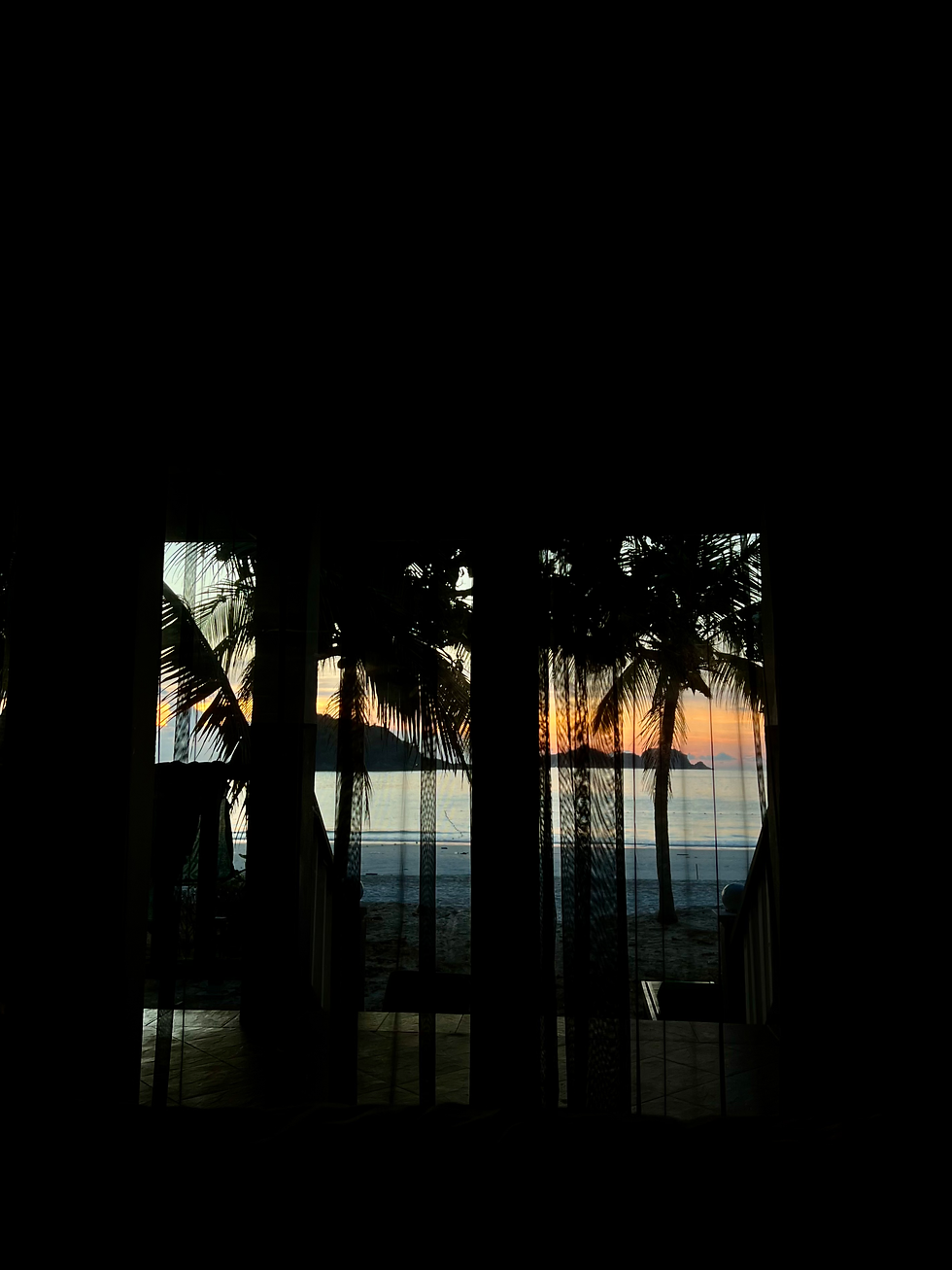
We stayed in one of the beachfront villas, and honestly, it was stunning. Falling asleep with floor-to-ceiling windows facing the sea, surrounded by palm trees and just steps away from the beach, felt like something out of a travel brochure. The villas offered a real sense of privacy while still being part of the resort.
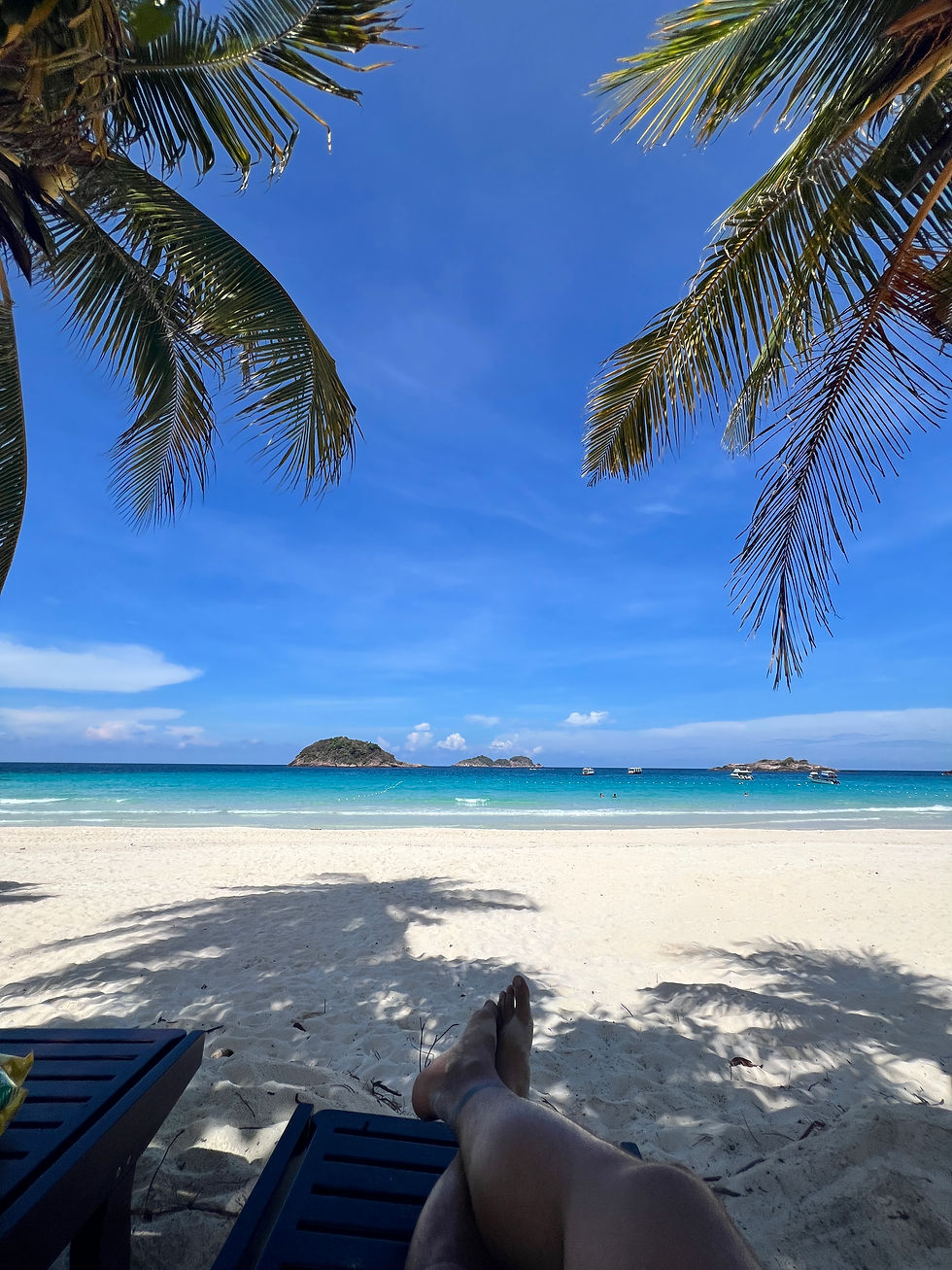
From what we could see, there were only a handful of them lined up along the beach.
The resort also offers more affordable room options, making it accessible for different budgets.
One thing I would recommend if you're staying somewhere special in Redang is to actually take the time to enjoy it. We often fill our itineraries from morning until evening, but this was one of those destinations where slowing down for a few hours felt completely justified.
That's exactly what we did on our arrival day. Instead of rushing off to explore, we spent time enjoying our villa, relaxing on the beach directly in front of the resort and simply appreciating our surroundings.
Afterwards, we headed to dinner and settled into island life.
One thing we really appreciated was the food package available at the resort. Guests could choose options that included breakfast, lunch and dinner, and in our opinion it was absolutely worth it.
Unlike some other island destinations, we didn't find many independent restaurants around Redang that tempted us to eat elsewhere regularly. We did venture out for dinner one evening, but honestly, it was considerably more expensive and nowhere near as good as the food available at the resort.
The dining experience at Peridot was excellent throughout our stay. The staff were extre
mely accommodating, particularly regarding dietary requirements and allergies, and always seemed willing to adapt dishes whenever needed.
Breakfast was served buffet-style and offered a great variety of fresh options. What really made it special, though, was the setting. The restaurant terrace overlooks both the swimming pool and the sea, creating the kind of view that makes you want to linger over your morning coffee for far longer than planned.
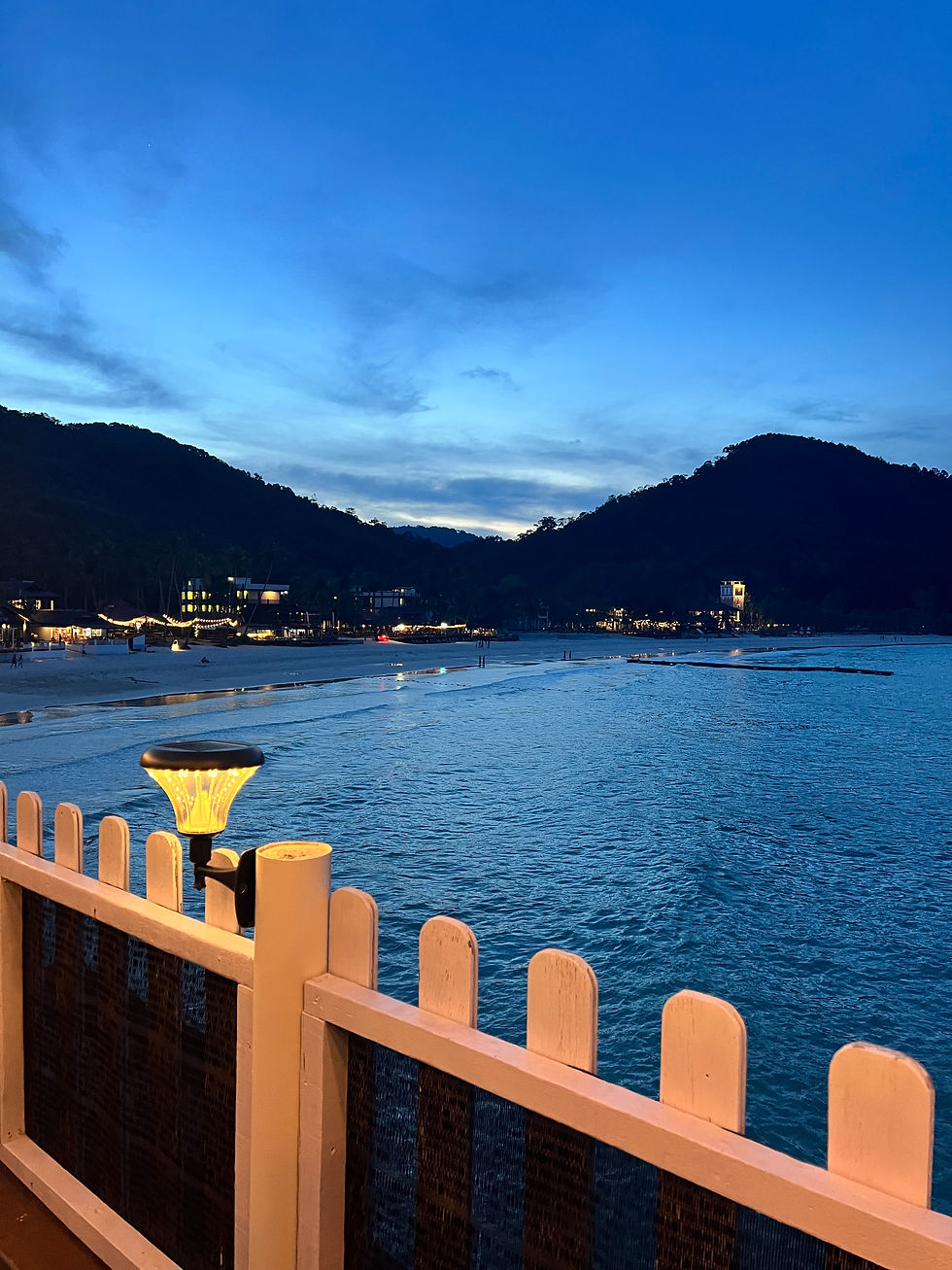
Our first evening in Redang was wonderfully relaxed. After dinner, we took a walk along the beach to explore the surrounding area.
It's easy to walk between neighbouring resorts, and along the coastline you'll find beach bars, restaurants, live music venues and nightly fire shows. We spent some time exploring, but we quickly found ourselves returning to the area around Peridot.
Just next to the resort was an open-air beachfront bar that became our favourite evening spot. With sea views, live music, good cocktails and a relaxed atmosphere, it was the perfect place to unwind after a day in the sun. Before long, it became our regular stop every night after dinner.
The fire shows were another highlight. Different performers seemed to rotate throughout the week, and there was almost always a show happening somewhere along the beach.

They were genuinely impressive and created a fantastic atmosphere after sunset. For families travelling with children, it's definitely something worth adding to the evening plans.
As first impressions go, Redang couldn't have been much better. While it offered a different experience from the Perhentians, it quickly won us over with its beautiful beaches, relaxed evenings and surprisingly luxurious island atmosphere.
Before moving on to Redang itself, it's worth talking a little more about the island-hopping trip that got us there.
As I mentioned earlier, we combined our transfer with a full-day excursion, which turned out to be a great way to break up the journey. The itinerary included several stops, some of which we enjoyed more than others.
One of the highlights was Turtle Point. As the name suggests, this is one of the best places in the area to see sea turtles, and we were lucky enough to swim alongside several of them.

That being said, we did leave with mixed feelings.
While seeing turtles in their natural environment is undoubtedly special, it appeared that some boats were feeding them to encourage them to stay in the area. If that was indeed the case, it's not something we particularly support. Unfortunately, we also witnessed several tourists touching the turtles despite repeated requests not to do so. At one point, we even found ourselves reminding other visitors to keep their distance.
The turtles themselves were beautiful, and the experience was memorable, but it's one of those attractions where we would encourage everyone to be as respectful as possible towards the wildlife.
Our next stop was Monkey Cave. The cave itself is interesting and certainly worth seeing, but timing can make a huge difference to the experience.
When we arrived, it seemed like every tour boat in the region had arrived at exactly the same moment. The cave was extremely crowded, with swimmers entering and leaving from all directions.

Since the space inside is relatively small, it felt a little chaotic and difficult to fully enjoy.
What we did enjoy, however, was the marine life surrounding the cave. The waters around the entrance were filled with colourful fish, and there were some beautiful coral formations nearby. Had it been slightly quieter, it probably would have been one of our favourite stops of the day.
Another snorkelling stop took us to an area known as the Water Garden, famous for its coral formations.

This was where we really started noticing one of the biggest differences between Redang and the Perhentian Islands.
While we had enjoyed snorkelling in the Perhentians, Redang seemed to have noticeably more healthy coral and marine life. The underwater scenery felt richer, more colourful and generally more vibrant. We saw a wider variety of fish and larger coral gardens than we had encountered during our previous days in the Perhentians.
The final stop before arriving on Redang was the famous sandbank Kerengga.

There's no denying that it's a beautiful place. Seeing a narrow strip of white sand surrounded by turquoise water is exactly the kind of tropical postcard scene people imagine when planning a trip to Malaysia.
That said, when we visited it was extremely busy. The beauty of the location was still there, but sharing it with large crowds inevitably changed the atmosphere. If crowds don't bother you, you'll probably love it. For us, we tend to prefer quieter spots, so while we were glad we visited, it wasn't necessarily our favourite stop of the day.
Even so, we would absolutely recommend including it in your itinerary. It's one of Redang's most iconic sights and definitely worth experiencing for yourself.
Our first full day in Redang began with another boat trip.
Unlike the transfer excursion from the previous day, this wasn't something we had planned in advance.

During our evening walk along the beach, we came across a small family-run tour company operating from one of the beachfront stalls. After chatting with them for a while, we decided to join one of their group excursions scheduled for the following morning.
There were only seven people in total on the boat, which made for a much more relaxed and personal experience compared to some of the larger tours we had seen around the island.
We left at around 9:30 in the morning and headed towards a small island located only a short distance from Redang. The journey itself took less than ten minutes, but the scenery was beautiful from the moment we left the shore.
The snorkelling there was excellent. The water was crystal clear, the coral was healthy, and there were plenty of fish swimming around us. We also had time to explore the beach itself, which was equally beautiful and well worth visiting.
Afterwards, we returned to the boat and headed back towards Turtle Point.

Since it was included in the tour package, we stopped there once again to see the turtles.
However, the highlight of the day came shortly afterwards.
Instead of following the standard itinerary, we asked whether it would be possible to visit the local turtle sanctuary Chagar Hutang. This wasn't normally included in the tour, but for an additional fee and depending on opening times, the company was happy to arrange it.
Thankfully, the sanctuary was open that day.
For us, this was a much more rewarding turtle experience than Turtle Point itself.
The sanctuary focuses on conservation and education, helping protect nesting turtles and increasing the survival rates of hatchlings. During our visit, we learned about the entire process, from collecting and protecting eggs to releasing young turtles into the sea.

We were able to see baby turtles up close, learn about the challenges they face in the wild, and gain a much deeper appreciation for the conservation work being carried out on the island.
It was fascinating, educational and genuinely heartwarming. Looking back, it was one of our favourite experiences in Redang.
From there, we continued to another snorkelling site out in the open sea. Although the weather wasn't quite as sunny as we had hoped, visibility remained good enough to enjoy the underwater scenery.
Once again, we were impressed by the abundance of coral and marine life. Redang continued to deliver some of the best snorkelling of our entire Malaysian trip, with colourful reef systems and countless fish around every corner.
By the time we returned to shore at around 2 p.m., we felt like we had already packed an entire day's worth of adventure into the morning.

The rest of the afternoon was left completely open. We enjoyed lunch back at the resort, spent some time relaxing by the beach and simply enjoyed the slower pace of island life before heading out again later in the evening.
That evening, we found ourselves returning to our now familiar spot next to the resort. By that point, it had become part of our daily routine. After dinner, we would head over for a drink, listen to the live music and simply enjoy the atmosphere.
Sometimes it's the simplest moments that stay with you the longest.
As the evening went on, we sat watching the moon reflecting on the water while the sound of the waves mixed with the music in the background. There wasn't anything particularly extraordinary happening, yet somehow it felt magical. After another busy day exploring Redang, it was the perfect way to slow down and appreciate where we were.
The following morning brought another adventure.
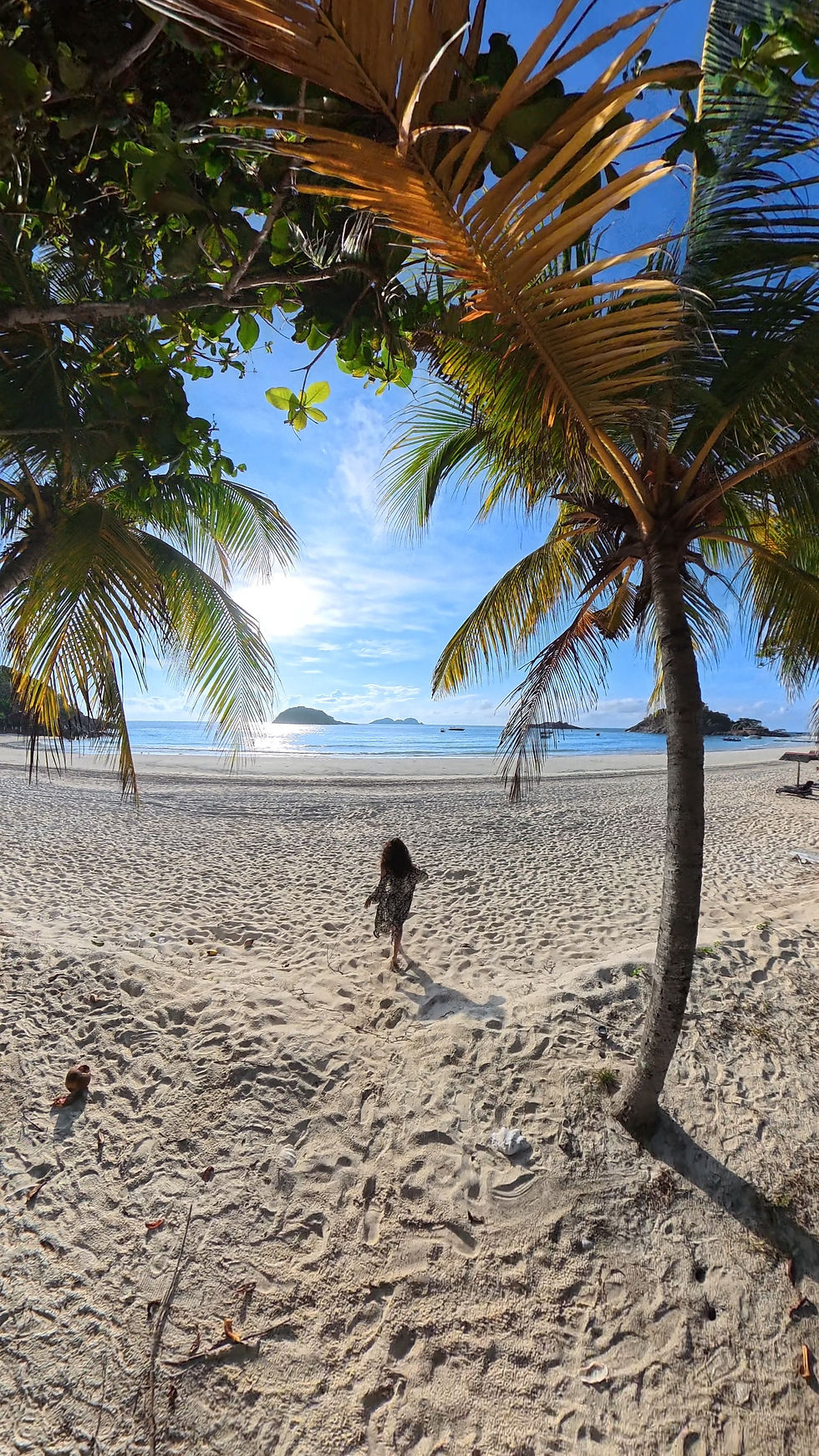
Having enjoyed our first excursion so much, we decided to book a second tour with the same family-run company we had discovered on the beach. The previous day had left a great impression on us, not only because of the places we visited but also because of
how friendly and accommodating they had been throughout the experience.
This time, we signed up for a full-day tour, eager to discover even more of what Redang and the surrounding islands had to offer.
The following day followed a fairly similar pattern, and once again we decided to join a tour with the same family-run company. After such a positive experience the day before, it felt like an easy decision.
This time, however, we opted for a more comprehensive island tour, giving us the opportunity to explore different sides of Redang and some of the nearby islands that we hadn't yet visited.
One of the stops took us to the famous Lang Tengah Island, with a small pier, a place known for encounters with baby sharks.

Naturally, we couldn't resist getting into the water. While it was a fantastic experience and certainly worth doing, we have to admit that we actually preferred the baby shark encounters we had in the Perhentian Islands. There seemed to be more sharks there, and the overall setting felt a little less crowded.
Even so, seeing these beautiful creatures swimming gracefully through the clear water was still a memorable experience and one of the highlights of the day.
Another standout moment came shortly afterwards when we stopped at yet another snorkelling site.
By this point, Redang had already impressed us with its underwater world, but somehow it continued to exceed our expectations. Once again, we found ourselves surrounded by healthy coral gardens teeming with marine life. Colourful fish darted between the reefs, schools of smaller fish moved together in perfect synchronisation, and everywhere we looked there seemed to be something new to discover.
We weren't disappointed in the slightest.

In fact, this stop further confirmed what we had been noticing since arriving on the island: Redang offered some of the best snorkelling of our entire Malaysian trip. The coral appeared healthier and more abundant than in many of the other places we visited, making every snorkelling stop feel like a completely different underwater adventure.
Other than that, the day was wonderfully relaxed. Much like our previous excursions, it was the combination of beautiful scenery, excellent snorkelling and the laid-back pace of island life that made the experience so enjoyable. There was never any rush, and we were able to simply enjoy each stop as it came, taking in everything that Redang had to offer.
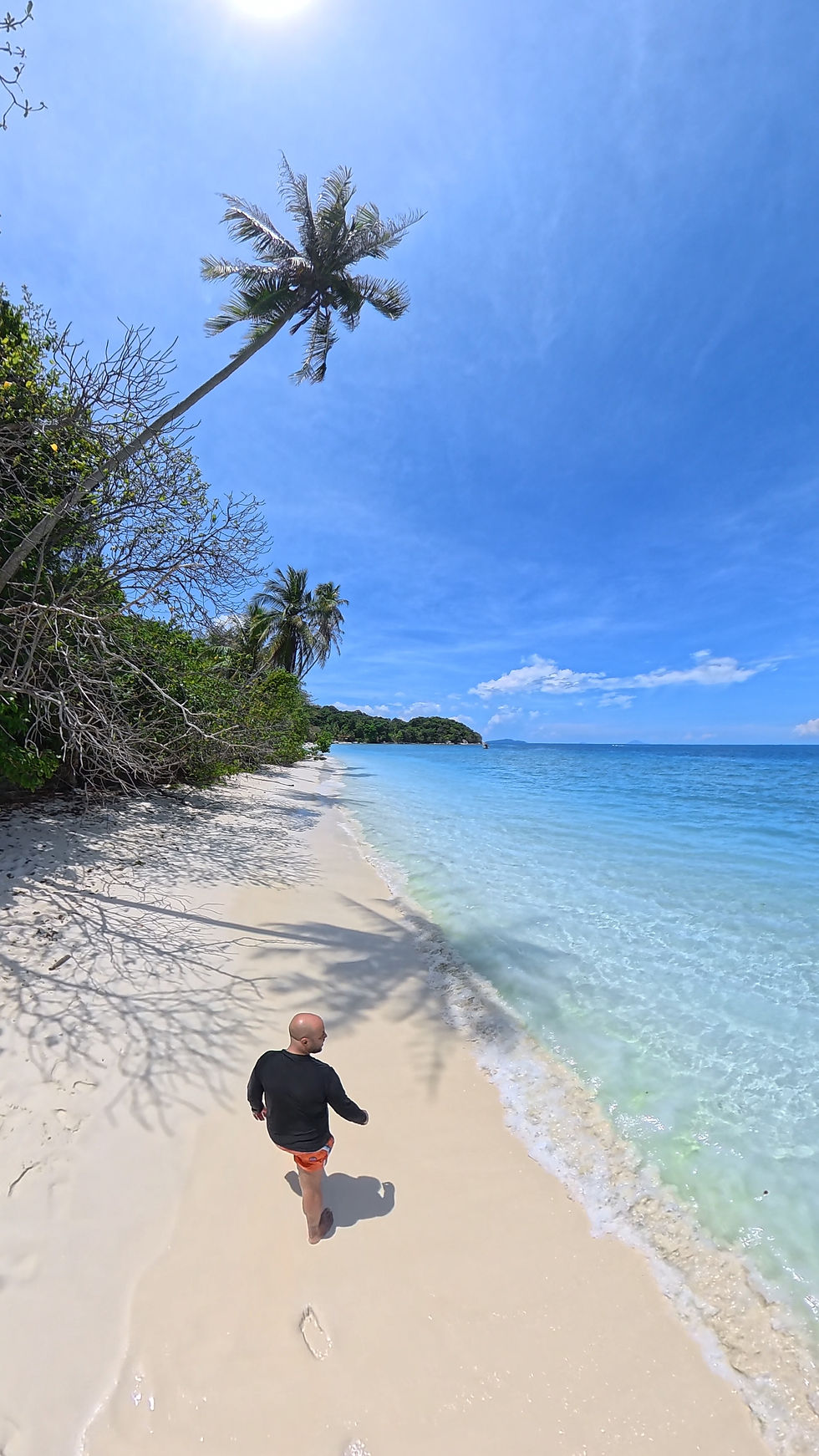
The tour finished at around the same time as the previous day's excursion, leaving us with another relaxed afternoon to enjoy at our own pace.
To be honest, by this point we had fallen into a rhythm that suited us perfectly. Mornings were spent exploring, snorkelling and discovering different corners of the island, while the afternoons were reserved for slowing down and making the most of our surroundings.
We headed back to the resort for lunch before spending the rest of the day enjoying everything that had made us choose Peridot in the first place. Whether it was relaxing on the beach, taking in the sea views from our villa, or simply sitting by the water with nowhere in particular to be, it was exactly the kind of balance we look for when travelling.
As much as we love filling our days with activities, having a few hours to simply enjoy the island itself turned out to be just as memorable as the excursions.
That evening, much like the nights before, we returned to our favourite beachfront spot next to the resort.

With live music playing in the background, a gentle sea breeze and the sound of the waves just a few metres away, it had become our little routine in Redang.
Once again, we found ourselves sitting there long after sunset, watching the moonlight reflect across the water. It's funny how some of the most memorable moments from a trip aren't necessarily the big excursions or famous attractions, but rather these simple, peaceful evenings that allow you to fully appreciate where you are.
By then, Redang had already won us over completely, and with one more full day still ahead of us, we were looking forward to seeing what else the island had in store.
Before we knew it, our final day in Redang had arrived.
One thing worth mentioning is that leaving the island is incredibly straightforward. Unlike many destinations where you feel the need to organise everything weeks in advance, we didn't pre-book any of our onward transfers before arriving in Redang.

Instead, we simply arranged our speedboat transfer directly through the hotel during our stay. Most resorts can organise this for you, making the whole process very easy and stress-free.
Ferry and speedboat schedules vary depending on the season and the resort, but generally there are only a handful of departures each day, so it's worth checking the available times with your accommodation once you arrive. We found that there was absolutely no need to worry or over-plan everything beforehand. The staff were used to arranging transfers and made the entire process effortless.
The journey back to the mainland was quick and comfortable, taking around 45 minutes by speedboat to Merang Jetty. From there, getting to the airport was equally easy. As soon as we arrived at the jetty, there were taxis available, and within roughly 30 to 40 minutes we were at Kuala Terengganu Airport ready for the next part of our Malaysian adventure.
Looking back, the logistics of travelling around this part of Malaysia were far simpler than we had expected before the trip. Whether it was arranging boat transfers, island-hopping tours or transport to the airport, everything felt surprisingly organised and straightforward.
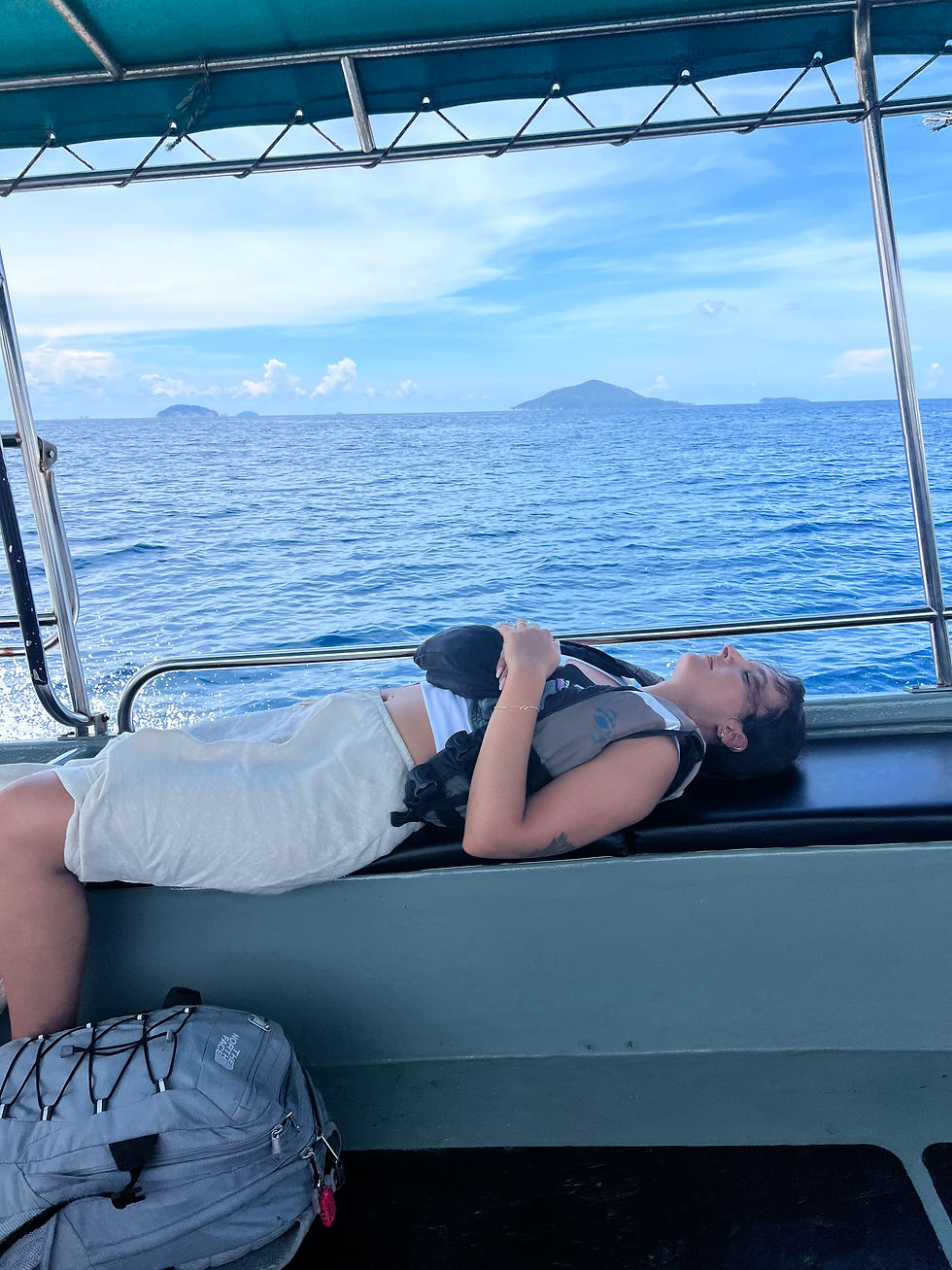
If you're currently planning your own trip and feeling overwhelmed by the transport side of things, our advice would be simple: don't stress. Once you're there, you'll quickly realise that the locals and the resorts handle these journeys every day, and they'll happily help you organise whatever you need.
And just like that, it was time to say goodbye to Redang Island and continue our journey to the next destination.
From Redang, we made our way back to Kuala Terengganu Airport for our flight to Kuala Lumpur before continuing on to our next destination: Sandakan, in Malaysian Borneo.
The airport itself isn't particularly large, but it has everything you might need before a flight, including a few shops, cafés and restaurants. When we arrived, it was surprisingly quiet, which seemed to be a recurring theme throughout our Malaysian journey.
In fact, one thing that really stood out during our entire trip was how reliable the domestic flights were. We took several internal flights throughout Malaysia and, remarkably, not a single one was delayed. Considering how many connections we had planned, this made travelling around the country incredibly easy and hassle-free.
Borneo & Sandakan
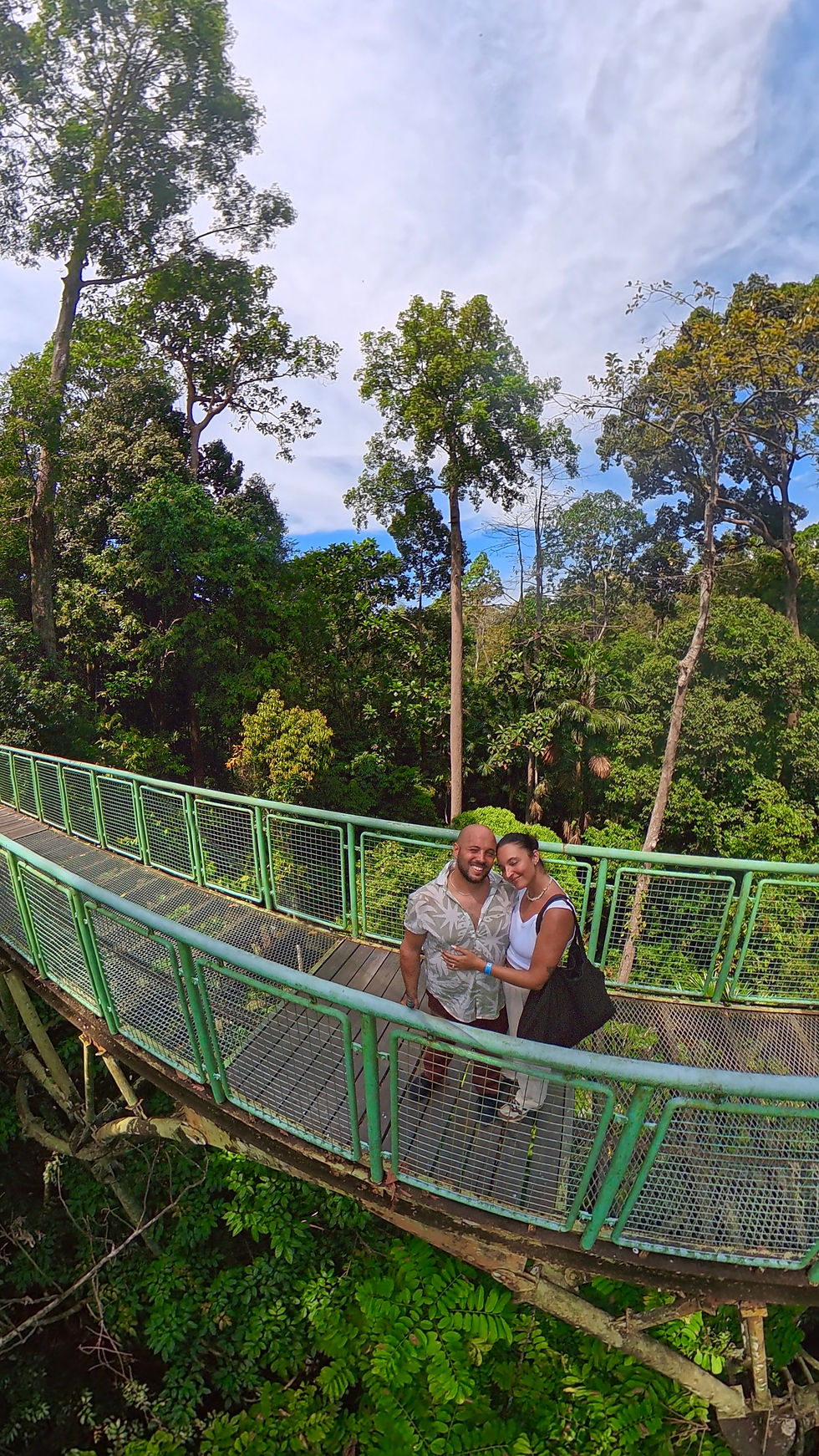
Our next stop was Sandakan, located in the Malaysian state of Sabah on the island of Borneo.
Borneo is often one of the biggest highlights for people visiting Malaysia, and for good reason. The opportunity to see some of the world's most unique wildlife in their natural habitat is something that attracts travellers from all over the globe.
For our stay, we booked an Airbnb located slightly outside Sandakan city centre. For us, the location worked perfectly. We weren't planning to spend much time exploring the city itself, as our main focus was wildlife conservation and the incredible sanctuaries located nearby.
Although we based ourselves slightly outside the city centre, it's definitely worth spending a little time in Sandakan itself if your schedule allows.
Sandakan is a port city, and compared to some of the quieter destinations we had visited earlier in the trip, it felt noticeably busier and more urban.
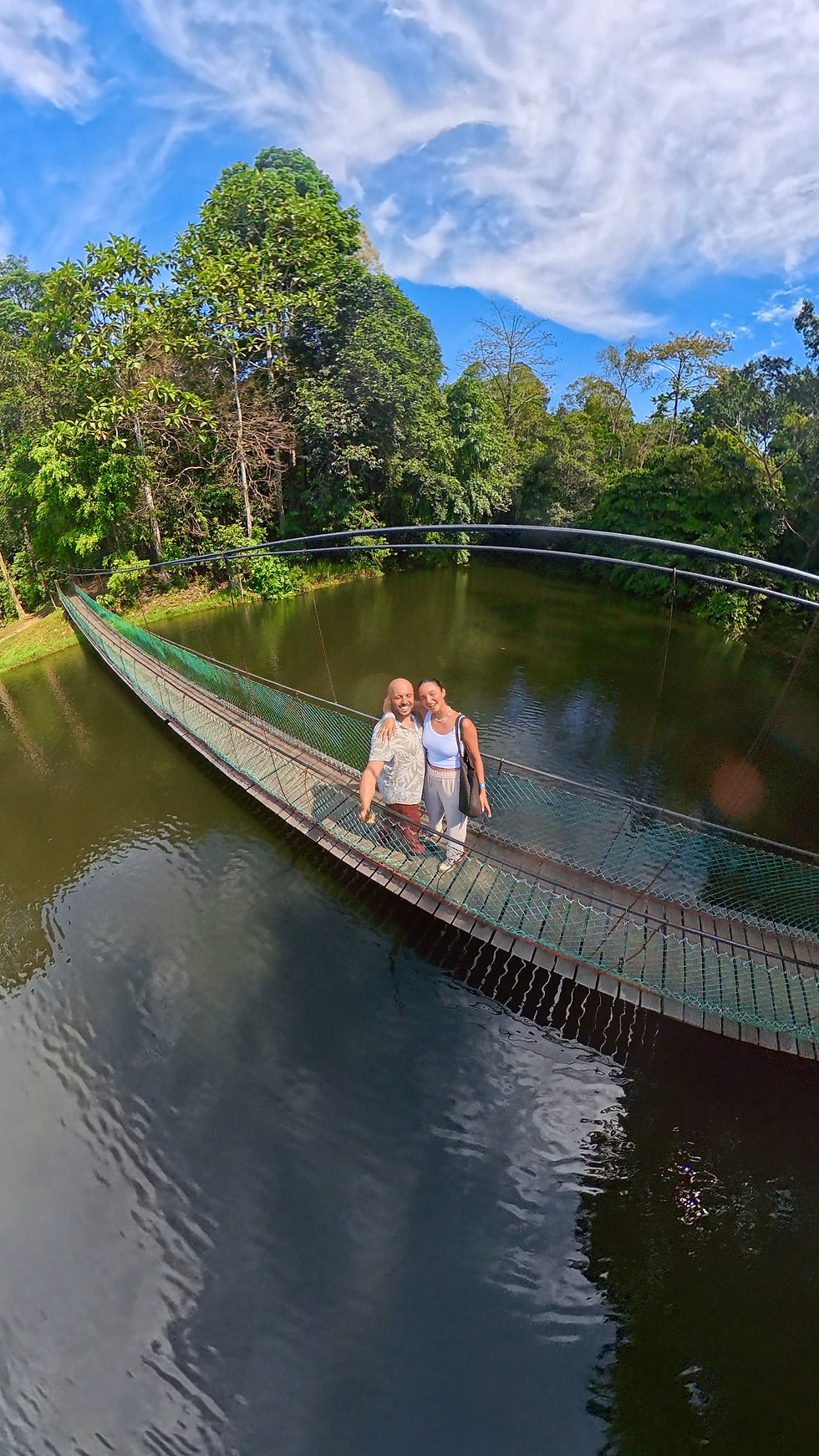
We only visited the centre during the evening, as we headed there for dinner one night, so we can't really comment on what it's like during the day.
To be completely honest, there wasn't a huge amount happening, at least from what we experienced. Sandakan isn't the kind of destination where you'll spend days wandering around sightseeing. Most travellers, ourselves included, tend to use it as a base for exploring the incredible wildlife attractions nearby.
That said, we still enjoyed strolling around for a few hours. The waterfront area was pleasant to walk through, and we came across several night food markets filled with local stalls and plenty of tempting smells. Even if you're only there for an evening, it's worth taking a walk around and soaking up a little of the local atmosphere before heading back for the night.
For us, however, the real reason to visit Sandakan wasn't the city itself but what lay just beyond it.

Over the following two days, we visited three of the region's most famous conservation centres: the Sepilok Orangutan Rehabilitation Centre, the Bornean Sun Bear Conservation Centre and the Proboscis Monkey Sanctuary.
Without a doubt, all three were among the highlights of our time in Borneo.
What we appreciated most was knowing that our visit directly contributed to conservation efforts. These aren't traditional zoos or attractions designed purely for entertainment. Their primary purpose is rehabilitation, protection and education, helping animals that have been orphaned, injured or displaced due to habitat loss and illegal human activities.
At the same time, the experience is bittersweet.

As fascinating as it is to see these incredible animals up close, it also serves as a reminder of the challenges they continue to face. Deforestation, illegal wildlife trade and habitat destruction remain major threats to many of Borneo's iconic species. Visiting these centres left us with an even greater appreciation for the work being done to protect them.
One practical tip we would strongly recommend is checking the feeding schedules before your visit.
Unlike traditional wildlife parks, the animals here live in large forested areas and are free to move around as they please. This is exactly how it should be, but it also means that sightings can sometimes be unpredictable. The feeding sessions offer the best opportunity to see the animals, as many of them choose to come closer during these times.

Fortunately, we didn't experience any queues or overcrowding at any of the centres, which made the visits feel relaxed and enjoyable.
The Orangutan Rehabilitation Centre was probably the place that left the strongest impression on us.
Watching orangutans move through the forest is fascinating in itself, but one of the most memorable parts of the visit was the nursery area. There, we had the opportunity to observe young orangutans alongside their mothers, learning essential skills before eventually becoming more independent.
What surprised us most was how expressive they were.
Their faces, body language and interactions felt incredibly human at times, making it easy to understand why so many people form an emotional connection with these animals.

We found ourselves standing there for much longer than we had planned, simply watching their behaviour and interactions.
The Bornean Sun Bear Conservation Centre was equally interesting. Before visiting, we knew very little about sun bears, despite them being the world's smallest bear species. Learning about their rescue stories and seeing them roaming through the large forest enclosures was both fascinating and educational.
The Proboscis Monkey Sanctuary offered something completely different again. These unique monkeys, with their unmistakable long noses and distinctive appearance, are found only in Borneo. Seeing them in person after years of only seeing photographs was a real highlight and another reminder of how special the island's wildlife truly is.

Looking back, we would recommend all three centres without hesitation.
Not only do they offer an opportunity to see some of Borneo's most iconic animals, but they also provide valuable insight into the conservation work that is helping protect these species for future generations. For anyone visiting Sandakan, they are absolutely worth including in your itinerary.
Next up was one of the absolute highlights of our entire trip.
I know I've said that a few times already throughout this blog, but Borneo is one of those places that almost everyone has heard about at some point in their lives. Whether it's the incredible biodiversity, the ancient rainforest or the unique wildlife found nowhere else on Earth, it has a reputation that naturally creates high expectations.
Thankfully, it didn't disappoint.
Kinabatang River
Our next destination was a riverside lodge deep in the Kinabatangan region, where we would spend three days immersed in nature, taking part in river cruises and guided jungle walks in search of wildlife.

Getting there was surprisingly easy. Our lodge, Sukau Greenview had organised a transfer for us, and after finishing our visit to the Sun Bear Conservation Centre, we were picked up directly from there. The journey to the river took around two hours and was much more comfortable than we had expected. The shuttle wasn't crowded, there was plenty of space, and the drive itself was pleasant as we gradually left the town behind and headed deeper into the Sabah countryside.
If you're wondering what to pack for a trip like this, don't worry too much.
Most lodges and river resorts are extremely experienced at hosting visitors and will usually send you a detailed packing list before your arrival.
Ours certainly did, and it was incredibly helpful. Since you'll be spending a lot of time outdoors, there are a few essentials you'll want to bring, particularly lightweight clothing, insect repellent and suitable footwear.

Some items, such as rubber boots for muddy trails and torches for night activities, were provided by the lodge. For everything else, however, it's worth arriving prepared so you can make the most of the experience.
Upon arrival, we checked into our rooms before the adventure began.
It's worth setting expectations correctly here. This isn't the kind of destination where luxury accommodation is the main attraction. The rooms were simple and functional rather than extravagant, but they were clean, comfortable and had everything we needed. After all, the real reason for being there wasn't to spend time inside the room.
Once we had settled in, it was time for our first activity: a sunset river cruise.
This was the moment when the trip truly began to feel special. Onething you'll quickly notice in this part of Borneo is how unpredictable the weather can be. The humidity is intense, and conditions can change very quickly.
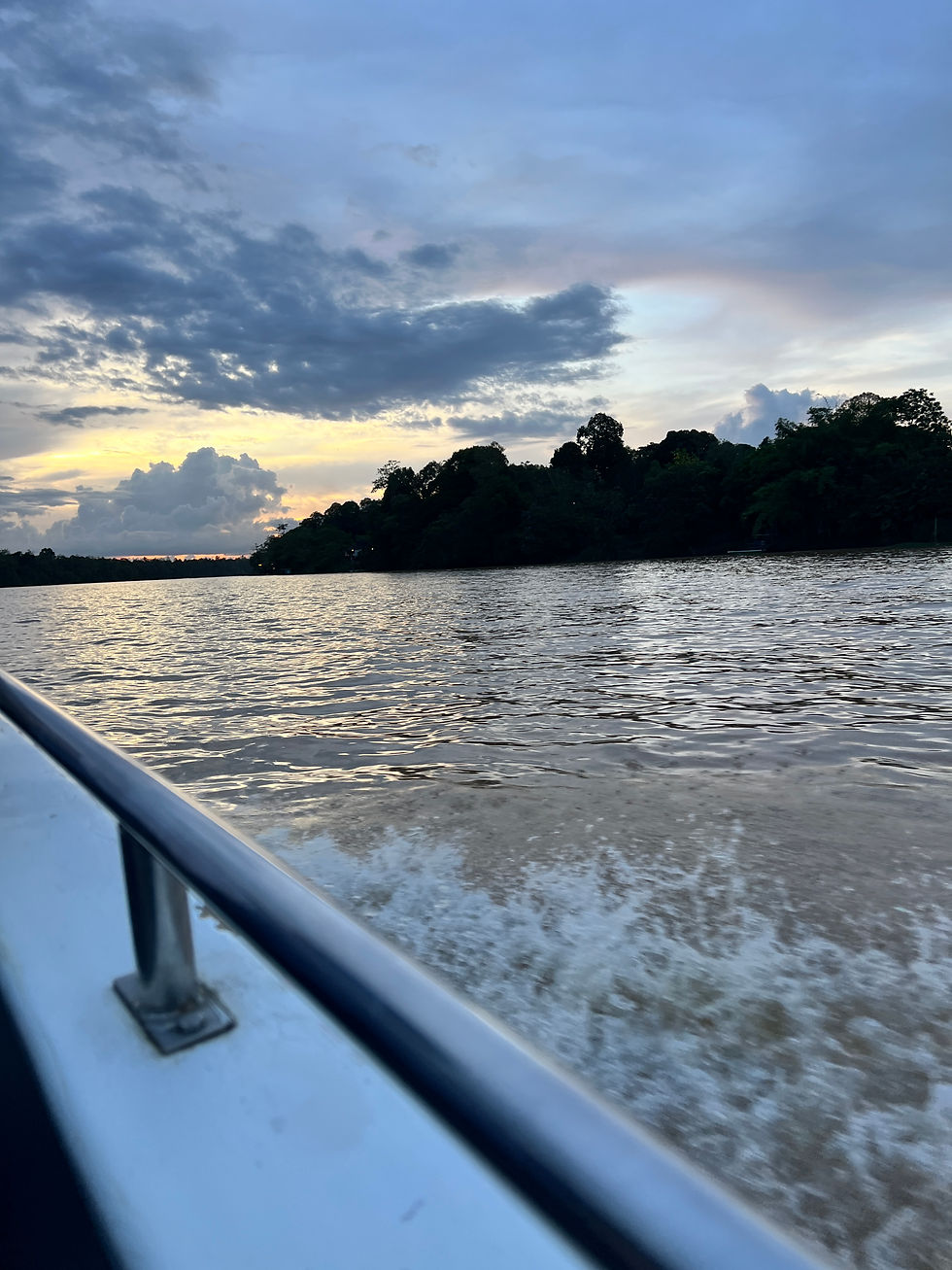
One moment the sky looks clear, and the next it seems as though a tropical storm could arrive at any second.
Fortunately, we were incredibly lucky. Throughout our entire stay, we managed to avoid any significant rain, which allowed us to enjoy every activity exactly as planned.
As our boat slowly moved along the river, the guides handed out binoculars to anyone who didn't have their own. If your lodge offers them, we would definitely recommend taking advantage of it. Most of the wildlife is spotted from a distance, and binoculars make a huge difference to the overall experience. If your accommodation doesn't provide them automatically, they can usually be rented from reception.
During these cruises, you'll spend a lot of time scanning the riverbanks and treetops. Birds are among the most common sightings, and Borneo is home to an astonishing variety of species. We also spotted small crocodiles resting along the muddy banks, perfectly camouflaged against their surroundings.

Then came the moment none of us expected quite so soon.
Elephants.
Not in a sanctuary. Not behind a fence. Not in a managed reserve.
Wild elephants.
Seeing them in their natural habitat was genuinely unforgettable. We watched from a respectful distance as they moved through the vegetation along the riverbank, completely unbothered by our presence.
What made the experience even more interesting was listening to our guide explain the relationship between the local communities and the elephants. Despite the challenges that can sometimes arise when wildlife and people share the same environment, there was a strong sense of respect for these animals. Conservation efforts have helped create a greater understanding of their importance, and it was inspiring to hear how much value local people place on protecting them.

For a first river cruise, it was difficult to imagine a better start.
As the sun slowly disappeared behind the rainforest and the sounds of the jungle began to change for the evening, we returned to the lodge feeling excited about what the next few days might bring. If our first few hours were anything to go by, Borneo was already proving to be every bit as magical as we had hoped.
Before continuing, it's worth mentioning that there are several different packages available for stays along the Kinabatangan River. Most lodges offer options ranging from a one-night, two-day stay to longer programmes lasting two nights and three days or more.
The shorter packages usually include the main highlights, such as a sunset river cruise, a morning cruise and a jungle walk. By staying an extra night, however, you gain access to additional activities that many visitors miss.

These can include an extra afternoon river safari, educational sessions about the region's culture and wildlife, visits to nearby attractions such as Gomantong Cave, and an additional early morning cruise before your transfer back to the main road for onward travel.
We opted for the longer stay and, looking back, we're very glad we did.
Our first day followed a relatively simple but incredibly rewarding schedule. After arriving and settling into our rooms, we headed out for the sunset river cruise before returning for dinner. Later that evening, we joined a night river cruise.
There was something particularly special about being out on the water after dark.
Everyone on the boat quietly scanned the riverbanks with flashlights, hoping to spot wildlife hidden amongst the vegetation. The atmosphere felt completely different from the daytime cruises. The sounds of the rainforest became more noticeable, the air felt cooler, and the moonlight reflecting on the river created an almost magical setting.
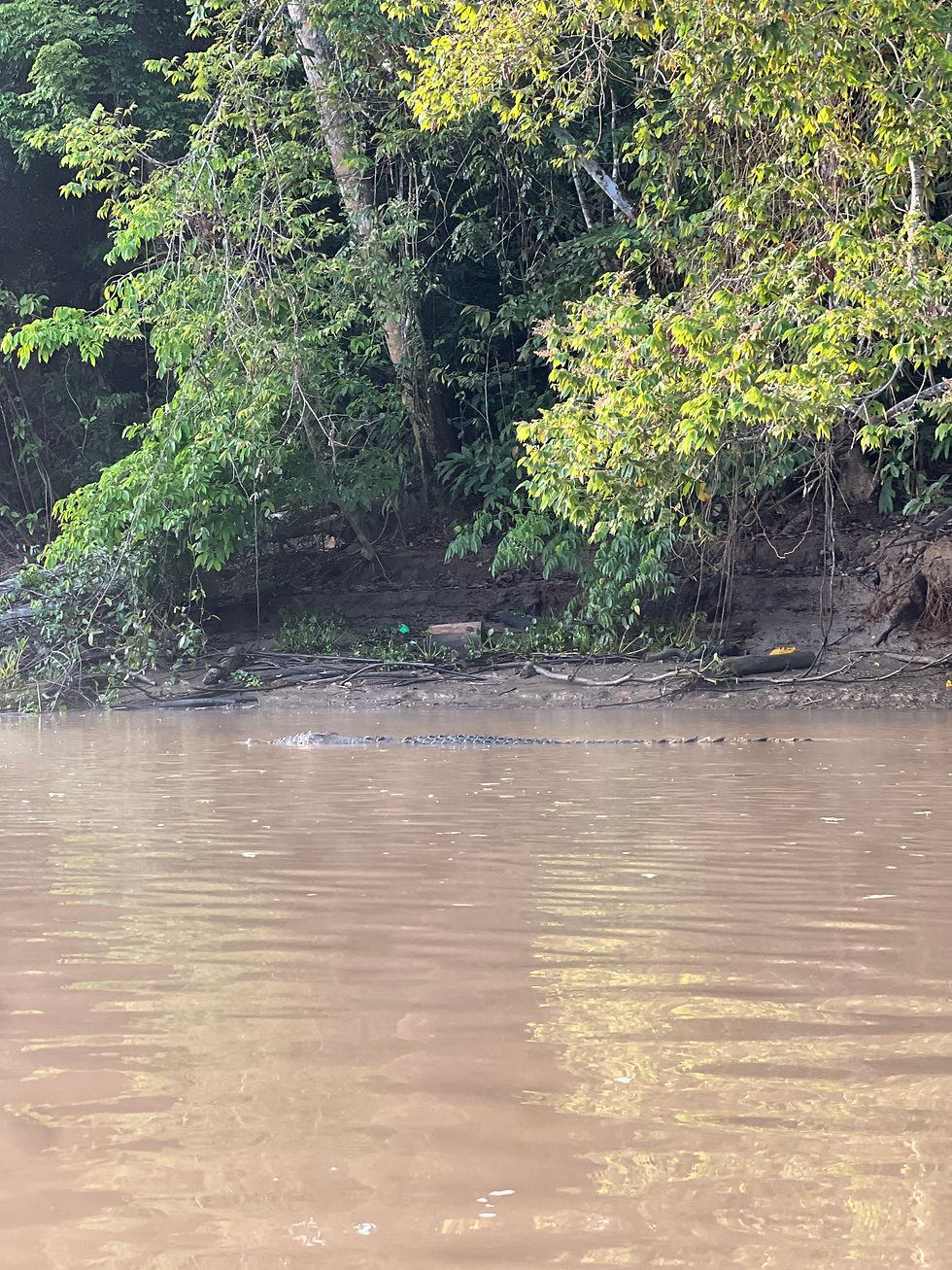
Even when wildlife sightings were limited, simply being there and experiencing the rainforest at night felt worthwhile.
The following day started early with another river cruise before breakfast.
Early morning is often one of the best times to spot wildlife, as many animals are most active before the heat of the day arrives. Throughout our stay, we were fortunate enough to see a variety of species, including macaques, proboscis monkeys, monitor lizards and countless birds.
Bird enthusiasts, in particular, will be in paradise here. The Kinabatangan region is home to several species of hornbills, arguably some of Borneo's most iconic birds. Seeing these huge birds flying across the river with their distinctive beaks was an experience in itself. Depending on your luck and the season, you may also encounter kingfishers, eagles, herons and many other species.

After breakfast, it was time for one of the activities we had been looking forward to most: a guided jungle walk.
This is where you'll quickly discover whether you're comfortable with the realities of the rainforest.
The heat is intense, the humidity can be overwhelming, and there are certainly a few creatures you need to make peace with before heading into the jungle. Leeches can occasionally be found along the trails, especially after rainfall, and there are plenty of insects sharing the forest with you.
If that doesn't bother you, however, the experience is fascinating.
Walking through a genuine tropical rainforest with an experienced guide allows you to appreciate just how complex and alive these ecosystems really are.

The guides explain everything from medicinal plants and towering trees to animal tracks and signs of wildlife activity that most visitors would never notice on their own.
Wildlife sightings are never guaranteed, but that's part of what makes the experience feel authentic. Everything you see is completely wild and free.
Another thing we appreciated was how the tours were organised. Guests were divided into small groups at the start of their stay, each assigned a guide who remained with them throughout the programme. Different guides often used different trails and locations, meaning the experience never felt crowded despite several groups staying at the lodge simultaneously.
Later that afternoon, we attended a cultural and conservation talk organised by the lodge.
This turned out to be much more interesting than we initially expected. We learned about the history of the Kinabatangan region, the challenges facing local communities, conservation projects currently underway and the ongoing efforts to protect Borneo's in credible biodiversity.

By the end of the session, we had gained a much deeper understanding of the area and the importance of preserving it for future generations.
Afterwards came one of the most memorable excursions of our entire Borneo adventure: a visit to Gomantong Cave.
This activity is usually optional, but we would strongly recommend including it if you have the opportunity.
Even before reaching the cave itself, we had an incredible wildlife encounter. To our amazement, we spotted four wild orangutans in the surrounding forest. Seeing orangutans in rehabilitation centres had already been special, but seeing them completely wild, moving freely through their natural habitat, was on another level entirely.

It was one of those moments that stays with you forever.
The cave itself is unlike anywhere else we visited during our travels.
Before entering, be prepared for one thing: the smell.
Gomantong Cave is home to millions of bats, along with countless insects, and the combination creates an unmistakable odour that hits you almost immediately. Once inside, however, the scale of the cave is truly impressive.
The cave is famous for its edible bird nests, which are highly valued in Chinese cuisine and used to prepare the renowned bird's nest soup. During our visit, we could see local workers carrying out the traditional and often dangerous task of harvesting these nests from high
up inside the cave using elaborate systems of ladders and ropes.

It's a practice that has existed for generations and remains an important source of income for local communities.
For those feeling energetic, there's also the option to continue to the viewpoint above the cave.
The trail is well maintained, but don't underestimate it. The climb can feel challenging in the intense tropical heat and humidity. Nevertheless, the effort is rewarded many times over.
By the time we reached the top, it was approaching sunset.
At around 5:30 p.m., one of nature's most extraordinary spectacles began.
The millions of bats that spend their days inside the cave started emerging in huge swirling columns, forming dark ribbons across the evening sky. They leave the cave each night to search for food, primarily insects, helping to control insect populations throughout the rainforest.

Watching this endless stream of bats flow out of the cave against the backdrop of the setting sun was genuinely breathtaking. It's one of those natural events that photographs simply cannot capture properly.
After returning to the lodge and enjoying dinner, the day wasn't quite over yet.
That evening we joined a night jungle walk.
Finding wildlife during the day can already be challenging in a rainforest. At night, it becomes even more difficult. However, that's also part of what makes these experiences so exciting.
The guides know where to look and what signs to watch for, and although sightings are never guaranteed, the possibility is always there. More importantly, every encounter feels genuine because the animals remain completely wild and undisturbed in their natural environment.
As we walked through the darkness listening to the sounds of the rainforest around us, it became clear that Borneo wasn't simply a destination to visit. It was a place to experience, appreciate and respect.

Before we knew it, our final morning along the Kinabatangan River had arrived.
As with the previous days, we started early with one last river cruise before breakfast. By this point, we had already experienced several cruises, but none of them ever felt repetitive.
One of the things we loved most about the programme was that each excursion explored a different section of the river and its surrounding tributaries. This meant that every outing offered new scenery, different landscapes and, most importantly, new opportunities to spot wildlife.
During our final cruise, we were lucky enough to see several more proboscis monkeys, one of Borneo's most iconic species. We also spotted crocodiles resting along the riverbanks, along with a variety of birds that by then had become a familiar but no less impressive part of our daily adventures.

As always, the experience was fantastic.
By this stage, we had come to appreciate that wildlife watching in Borneo isn't necessarily about constantly ticking animals off a list. Sometimes it's simply about being there, surrounded by the sounds of the rainforest, quietly observing whatever nature decides to reveal to you that day.
After returning to the lodge, we enjoyed one final breakfast before packing our bags and preparing for the next stage of our journey.
Transfers were once again organised by the lodge, making the logistics incredibly simple. A shuttle bus collected guests and transported us to the main bus stop used by travellers continuing their journey through Sabah.
For many visitors, this marks the start of the journey to Semporna, which is exactly where most of the guests we had met during our stay were heading next.

From the bus stop, regular buses continue onwards to Semporna, and the lodge staff are very helpful in explaining departure times and helping guests coordinate their connections. As with most of our travels throughout Malaysia, we found that there was very little to worry about in terms of organisation. The staff deal with these transfers every day and make the process straightforward.
In our case, we opted for a private taxi instead. It was a little more convenient and suited our schedule better, but both options are perfectly viable depending on your budget and travel preferences.
Whichever option you choose, the lodge will provide all the information you need regarding timings and transport arrangements.
As we left the Kinabatangan behind, we couldn't help but look back on what had been one of the most memorable parts of our entire Malaysian adventure. The wildlife, the river cruises, the rainforest walks and the chance to experience Borneo's incredible biodiversity up close had exceeded every expectation we had before arriving.
But the journey wasn't over yet.
Waiting for us next was Semporna, another destination that had long been on our travel wishlist and one that promised a completely different side of Borneo once again.
Borneo & Semporna
Once we arrived in Semporna, our first stop was the main jetty area. This is something worth mentioning because it may well be your last chance to stock up on essentials before heading to your island resort.
Around the waterfront and town centre, you'll find supermarkets, pharmacies, convenience stores and a handful of other useful shops. If there's anything you think you might need during your stay, whether that's snacks, toiletries, medication or any other travel essentials, we would strongly
recommend picking them up here.
This is particularly important because many of the island resorts around Semporna are quite isolated and often
At least in our experience, once we left the mainland, there weren't many opportunities to buy anything we had forgotten.

Our accommodation for the next few days was Danglai Resort, a relatively new property located away from the mainland.
The transfer from Semporna to the resort took around twenty minutes by boat, and as we made our way across the water, we began to notice the many other resorts and overwater structures scattered throughout the area. It's quite an impressive sight and gives you an immediate sense that you've arrived somewhere very different from anywhere else in Malaysia.
One thing we noticed fairly quickly, however, was that accommodation in the Semporna region tends to follow a slightly unusual pattern.
Prices are often quite high, particularly compared to many other parts of Malaysia, yet the level of service and overall facilities don't always reflect those prices.

We don't say this as criticism, merely as an honest observation based on our own experience. While many resorts market themselves as luxury destinations, the reality often feels a little more basic than you might expect given the cost.
That being said, the location itself more than makes up for many of those shortcomings.
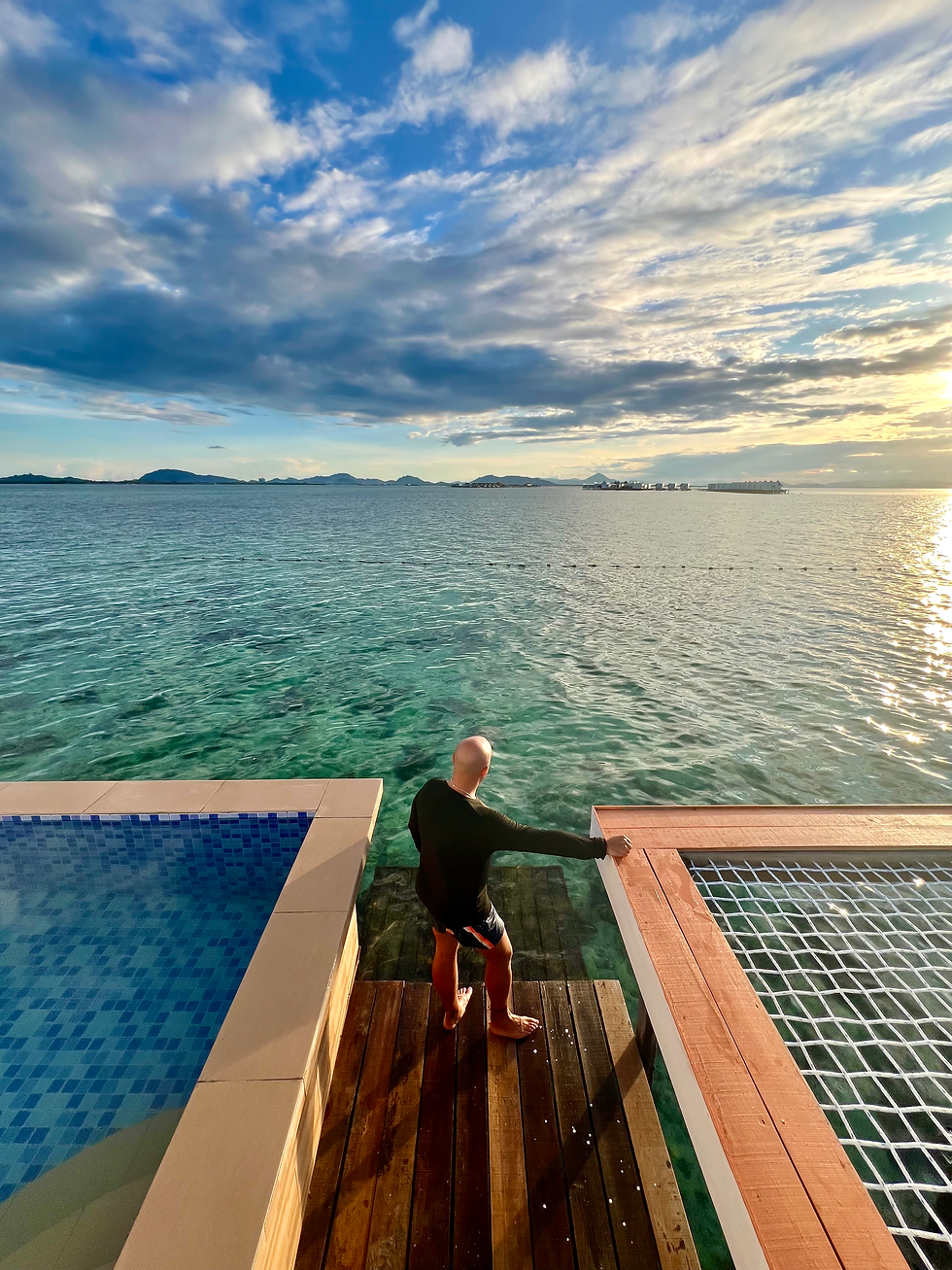
Our villa, like many of the others, came with a private plunge pool and an outdoor relaxation area overlooking the water. But the real luxury wasn't the room itself.
It was the view.
Every direction we looked revealed nothing but crystal-clear water stretching out around us. Beneath the wooden walkways and platforms, we could see starfish resting on the seabed, colourful fish swimming between the structures and patches of coral visible through the incredibly clear water.
We spent countless moments simply standing there, looking down into the sea.
It was one of those rare places where the scenery alone becomes the main attraction. Regardless of any thoughts we had about the accommodation itself, waking up every morning surrounded by that view was something truly special and undoubtedly one of the most beautiful settings of our entire trip.

We ended up spending four days in Semporna, and despite not being scuba divers, it turned out to be one of the most impressive marine destinations we have ever visited.
Semporna is famous worldwide for diving, and rightly so. Many people travel here specifically to explore some of the richest marine ecosystems on the planet. If you are a certified diver and enjoy underwater adventures, this area will probably feel like paradise.
At the time of our trip, however, neither of us were scuba divers.
That meant we missed out on some of the more specialised dive sites where divers can encounter larger marine species and explore deeper reefs. Even so, we never felt like we were missing out. The amount of snorkelling opportunities available around Semporna is incredible, and many of the locations are accessible to everyone regardless of diving experience.
Another thing worth mentioning is accommodation.
While we chose to stay at an island resort, many travellers opt to stay on the mainland in Semporna itself and simply join day tours each morning. If you're travelling on a tighter budget, this can be a significantly more affordable option while still allowing you to visit exactly the same islands and snorkelling sites.
On our first day, shortly after arriving at the resort, we had already booked our first activity: sea walking.

If you've never heard of it before, sea walking is exactly what it sounds like. Participants wear a specially designed helmet connected to an oxygen supply and then walk along the seabed while surrounded by marine life.
No diving licence is required, and you don't even need to be a particularly strong swimmer.
The activity centre was located only a few minutes by boat from our resort, right in the middle of the sea. The experience itself was a lot of fun and offered a completely different perspective compared to traditional snorkelling. Being able to stand on the seabed while colourful fish swam around us felt surprisingly surreal.
A special mention also goes to the staff running the activity. They were incredibly friendly, professional and helped everyone feel comfortable throughout the experience.
The following day was dedicated to one of the excursions we had been looking forward to most.

Like many tours in the area, participants were collected directly from their hotels and resorts in the morning before heading out to explore the surrounding islands.
Our first stop was the famous Bohey Dulang viewpoint.
If you've ever searched for photos of Semporna, there's a good chance you've already seen this place.
The hike itself is relatively short but shouldn't be underestimated. The tropical heat and humidity make the climb considerably more challenging than it looks, especially during the middle of the day. There were definitely moments where we questioned our life choices on the way up.
The effort, however, is more than rewarded.
From the summit, you're greeted by one of the most spectacular views in Malaysia. Looking down over the turquoise sea, the surrounding islands and the remnants of an ancient volcanic crater is simply breathtaking. It is easily one of the most iconic viewpoints we visited during the entire trip and something we would recommend without hesitation.
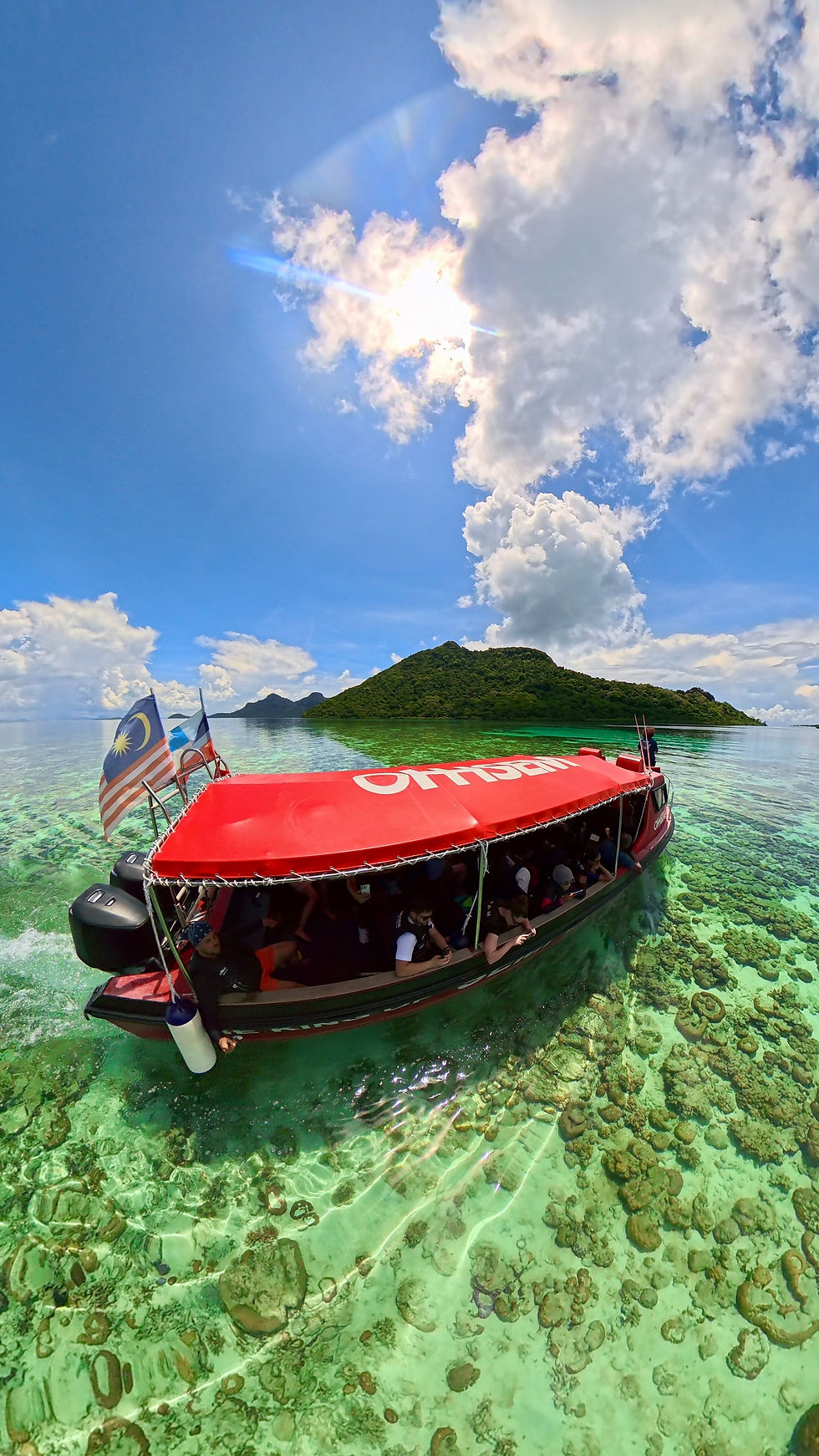
After the hike, we stopped for a well-deserved lunch on one of the nearby islands. This seemed to be the standard lunch stop for most tour operators in the area, and after the morning's exertion, everyone was more than happy to sit down, relax and recharge.
With lunch finished, it was finally time for what we had really come for: snorkelling.
Our first snorkelling stop completely blew us away.
Throughout our travels we had seen some beautiful reefs, including those in the Perhentian Islands and Redang, but this was on another level altogether.
The coral was some of the healthiest and most colourful we had ever seen. Bright reds, yellows, blues and purples covered the seabed, creating an underwater landscape that almost looked artificial because the colours were so vivid. Fish were everywhere, from tiny reef fish darting between the coral formations to larger schools moving gracefully through the clear water.
It was one of those moments where you stop swimming for a second simply to take it all in.

The second snorkelling stop was equally impressive.
This area seemed particularly rich in marine life, with countless starfish scattered across the seabed. Once again, the coral formations were spectacular, and visibility was excellent, allowing us to fully appreciate the incredible biodiversity that makes this region so famous.
Our final stop brought us to one of the area's most beautiful islands, known for its powder-white sand and crystal-clear shallow waters.
The island itself was every bit as stunning as the photographs suggest. With a narrow stretch of sand extending into the sea and turquoise water surrounding it on all sides, it felt like the definition of a tropical paradise

.Some people chose to continue snorkelling, while others simply relaxed, swam or explored the island at their own pace.
For us, it was the perfect way to end an already unforgettable day.
By the time we returned to the resort that evening, we were completely exhausted, slightly sunburnt despite our best efforts and once again reminded of why Semporna has earned such an incredible reputation amongst ocean lovers from around the world.
Most of the tours we joined in Semporna lasted until around 3 or 4 p.m., making them proper full-day excursions. By the time we returned each afternoon, we were usually more than ready for a shower, dinner and a relaxing evening overlooking the water.
One thing we appreciated was how easy the logistics were. At the end of each excursion, the boats would simply drop everyone back at their respective resorts, making the entire experience completely hassle-free.
The following day, we joined another island-hopping tour, eager to discover even more of the incredible marine landscapes surrounding Semporna.

As with the previous excursion, snorkelling was once again the main focus of the day.
One of our first stops was Timba-Timba Island, probably the busiest island we visited during our stay. It seemed that almost every tour operator in the region included it in their itinerary, and there were noticeably more boats and visitors than at many of the other locations we explored.
Despite the crowds, it was still a beautiful place to visit. The white sand, turquoise water and tropical scenery were exactly what most people imagine when dreaming about island life in Southeast Asia.
After spending some time there, we continued on to several snorkelling locations.
If there was one moment that stood out from this entire day, it was undoubtedly seeing wild sea turtles.
Unlike some of the more organised turtle encounters we had experienced elsewhere during the trip, these turtles were simply going about their lives completely undisturbed in their natural habitat.

Watching them glide effortlessly through the water while we floated nearby was genuinely breathtaking.
Experiences like that are difficult to describe properly. They remind you how special these ecosystems really are and why protecting them is so important.
Following several snorkelling sessions, we stopped for lunch on Pom Pom Island, home to Doris Resort.
After a busy morning in the water, it was the perfect place to take a break.
The island itself was beautiful, and the relaxed atmosphere made it an enjoyable stop before continuing with the rest of the excursion.

Once lunch was over, we headed back out for our final snorkelling adventures of the day.
The first site was located just off the coast of Pom Pom Island itself and offered yet another opportunity to explore the area's vibrant underwater world. By this stage, we almost felt spoiled by how consistently impressive the reefs around Semporna were.
Our final stop took us to another reef area near one of the private islands in the region, often included in island-hopping itineraries depending on conditions and access. Once again, visibility was excellent, marine life was abundant and the coral formations were spectacular.
What continued to amaze us throughout our time in Semporna was the sheer variety between each snorkelling site. Even after several consecutive days in the water, every location felt different. Some areas were dominated by colourful coral gardens, others by starfish-covered seabeds, while others offered opportunities to encounter larger marine life such as turtles.

By the end of the day, we had spent hours in the water, visited several islands and experienced some of the best snorkelling of our lives.
If you're not a diver and are wondering whether Semporna is still worth visiting, our answer would be a definite yes. While the area is world-famous for scuba diving, there is more than enough beauty above and just below the surface to make it an unforgettable destination for snorkellers as well.
And just like that, our time in Semporna came to an end.
Looking back, it was the perfect final island destination for our Malaysian adventure. While the Perhentian Islands had introduced us to Malaysia's beautiful tropical beaches and relaxed island atmosphere, and Redang had impressed us with its stunning resorts and vibrant marine life, Semporna felt like the grand finale.
The underwater world here was unlike anything we had experienced elsewhere during the trip.

Even without scuba diving, we were able to explore some truly spectacular reefs, encounter sea turtles in the wild and visit islands that looked as though they had been taken straight from a postcard.
From Semporna, we flew back to Kuala Lumpur for one final night before heading home.
After weeks spent moving between islands, rainforests, rivers and wildlife sanctuaries, returning to the capital felt strangely familiar. We used our final day to take things a little slower, enjoy a few last Malaysian meals and, of course, do some last-minute shopping.
Kuala Lumpur is ideal for this. Whether you're looking for souvenirs, local snacks, gifts for friends and family or simply want one final stroll through the city's shopping districts, it's an easy and convenient place to spend your final day before flying home.
As our trip drew to a close, we found ourselves reflecting on everything we had experienced over the previous weeks.

Malaysia had exceeded every expectation we had before arriving.
We had snorkelled among some of the most beautiful coral reefs we have ever seen, explored remote tropical islands, encountered orangutans, sun bears and proboscis monkeys, watched wild elephants from a boat on the Kinabatangan River and witnessed some of the most impressive biodiversity on the planet.
What perhaps surprised us most, however, was how easy the entire journey felt. Before travelling, we had spent a lot of time planning routes, transfers and logistics, particularly because we wanted to combine so many different regions into a single trip. In reality, everything was remarkably straightforward. Domestic flights were reliable, transfers were easy to arrange, accommodation providers were incredibly helpful and travelling between destinations felt far less complicated than we had imagined.

Malaysia is often overlooked in favour of some of its Southeast Asian neighbours, but after this trip, we genuinely believe it deserves far more attention than it receives.
Whether you're looking for pristine islands, world-class snorkelling and diving, incredible wildlife encounters, vibrant cities or simply a destination that offers a little bit of everything, Malaysia delivers.
Would we return?
Without hesitation.
There are still countless places we would love to explore, particularly in Borneo, and many experiences we know we only scratched the surface of during this trip.
For now, though, we left with incredible memories, thousands of photographs and a growing list of reasons to come back.
And that's probably the best compliment we can give any destination.


Comments